
Case study
Document Management Legal Industry
Version history, change comparison and role-based access for firms that live and die by the paper trail.
- Industry
- Legal technology
- Year
- 2023
- Timeline
- About four months
- Services
- Front-end engineering, Cloud integration, Access control and security UI, UI design
- Stack
- ReactJS, Redux, jQuery, HTML/CSS
What changed
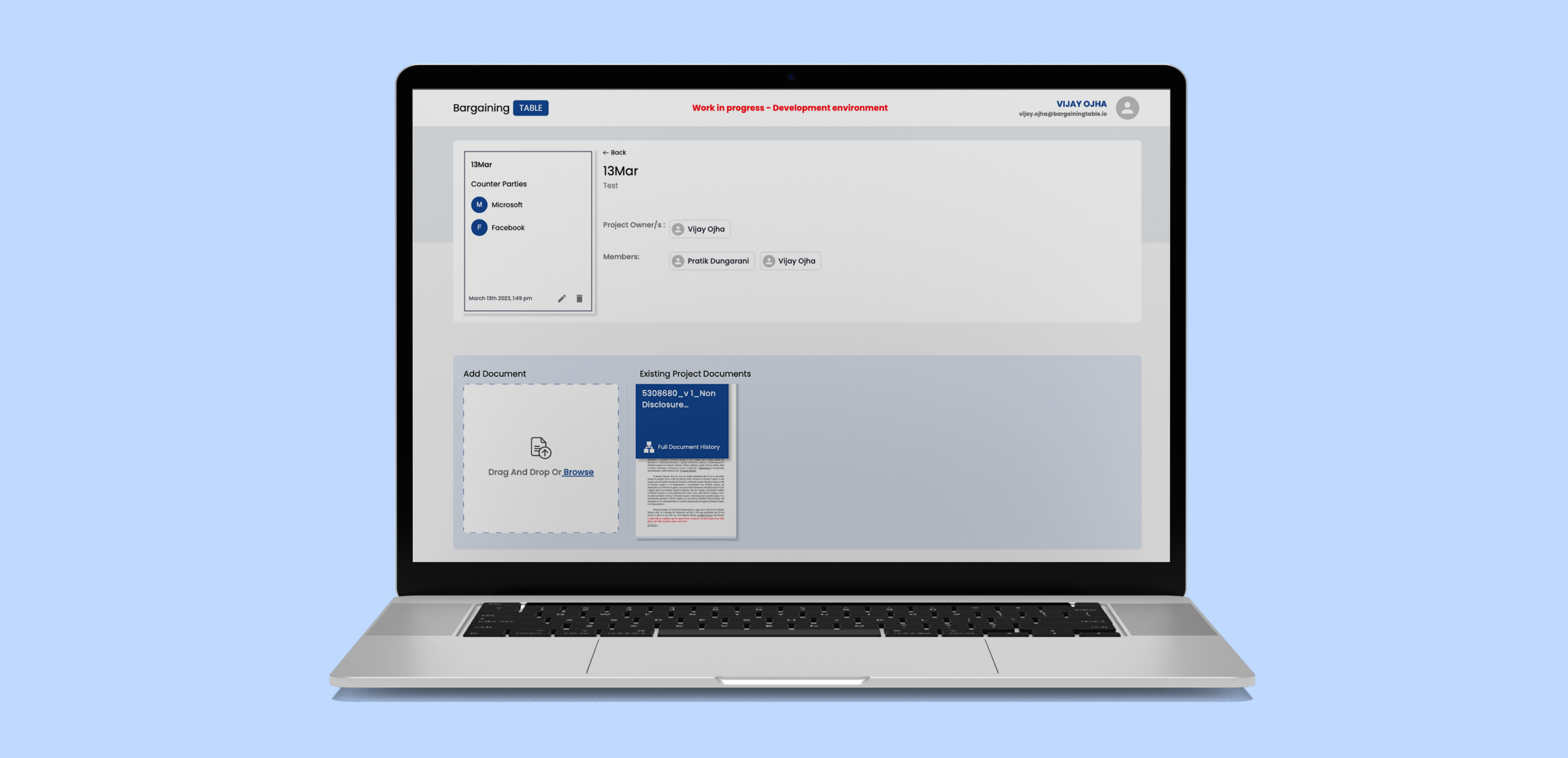
- Full version history with side-by-side comparison of what changed
- Role-based access, so people see only the documents their role allows
- An audit trail detailed enough to stand up in legal proceedings
Numbers available under NDA on request.
Legal work is document work. This system gives legal service providers a controlled way to store, share and track documents, with the version history and access rules that the field demands.
Overview
We built a document management system aimed at law firms and legal departments. It handles storage and retrieval, but the part that matters is control: knowing exactly how a document reached its current state, and making sure the right people, and only the right people, can see it.
The problem
Firms handle large volumes of sensitive documents. Three things were hard:
- Confidentiality. Client information has to be protected, and access has to be provable, not just assumed.
- Version control. Which draft is current, what changed between versions, and who changed it, are questions that come up in disputes.
- Access, without friction. People need to reach documents from wherever they are working, but not documents that are outside their remit.
Our approach
We built the interface around the document lifecycle: create, revise, review, finalise. Every save is a version, and any two versions can be compared side by side to see exactly what changed. Access is governed by role, defined once and applied everywhere, so a paralegal and a partner see different sets of documents by design.
Underneath, cloud storage keeps documents available from any location, and every action feeds an audit trail that records who did what and when.
What we built
- Versioning on every document, with a side-by-side comparison view of changes between versions.
- Role-based access control, configured centrally and enforced throughout.
- A complete audit trail of access and changes, detailed enough to use as evidence.
- A cloud-backed store so documents are reachable wherever legal staff are working.
The outcome
Firms get a defensible record of how every document evolved and who touched it, access that matches responsibility, and retrieval that does not depend on being in the office. The lifecycle that used to live across email threads and shared drives runs in one system.